GrantAI · Grant SaaS
From an open call to a managed project.
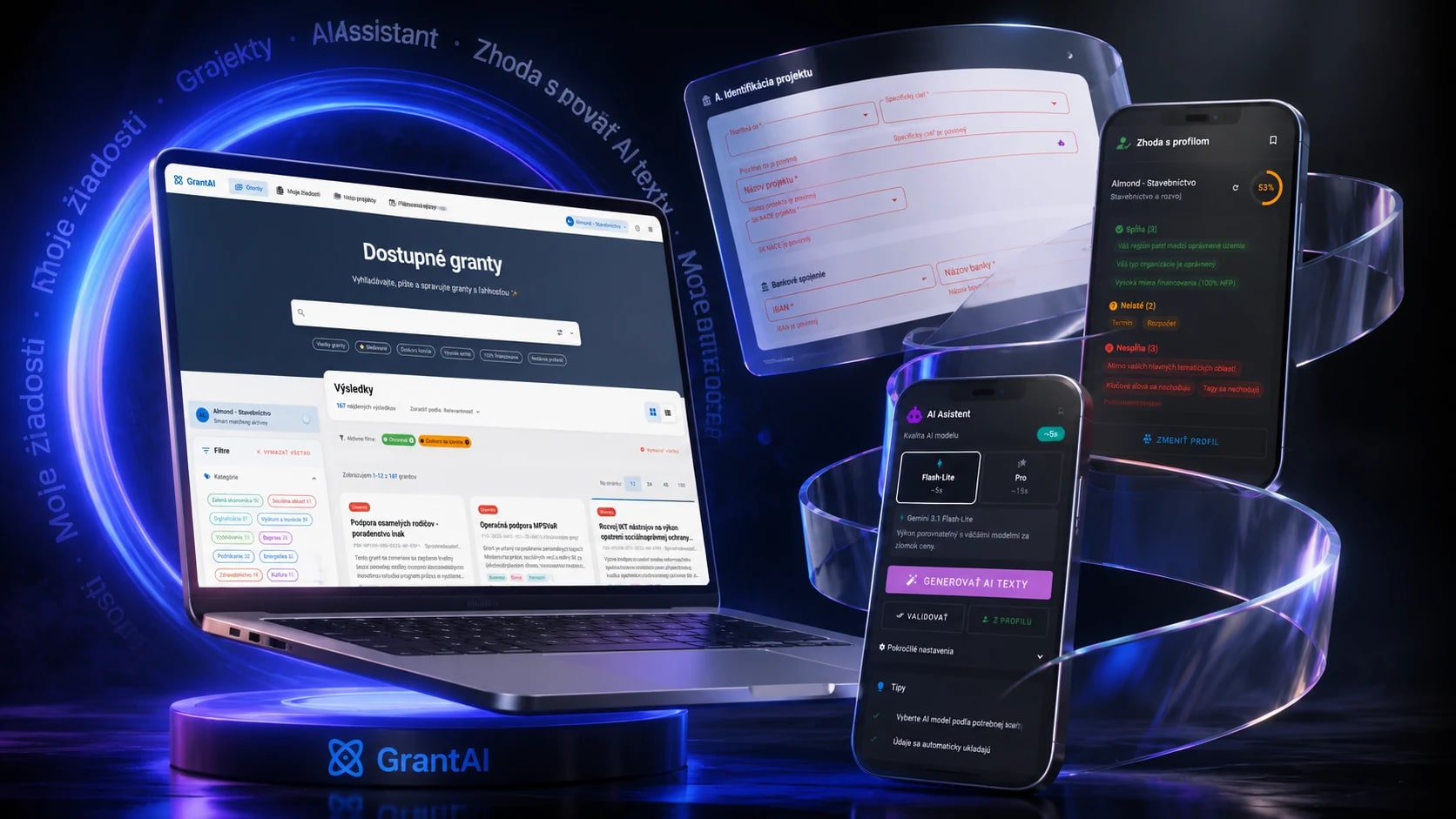
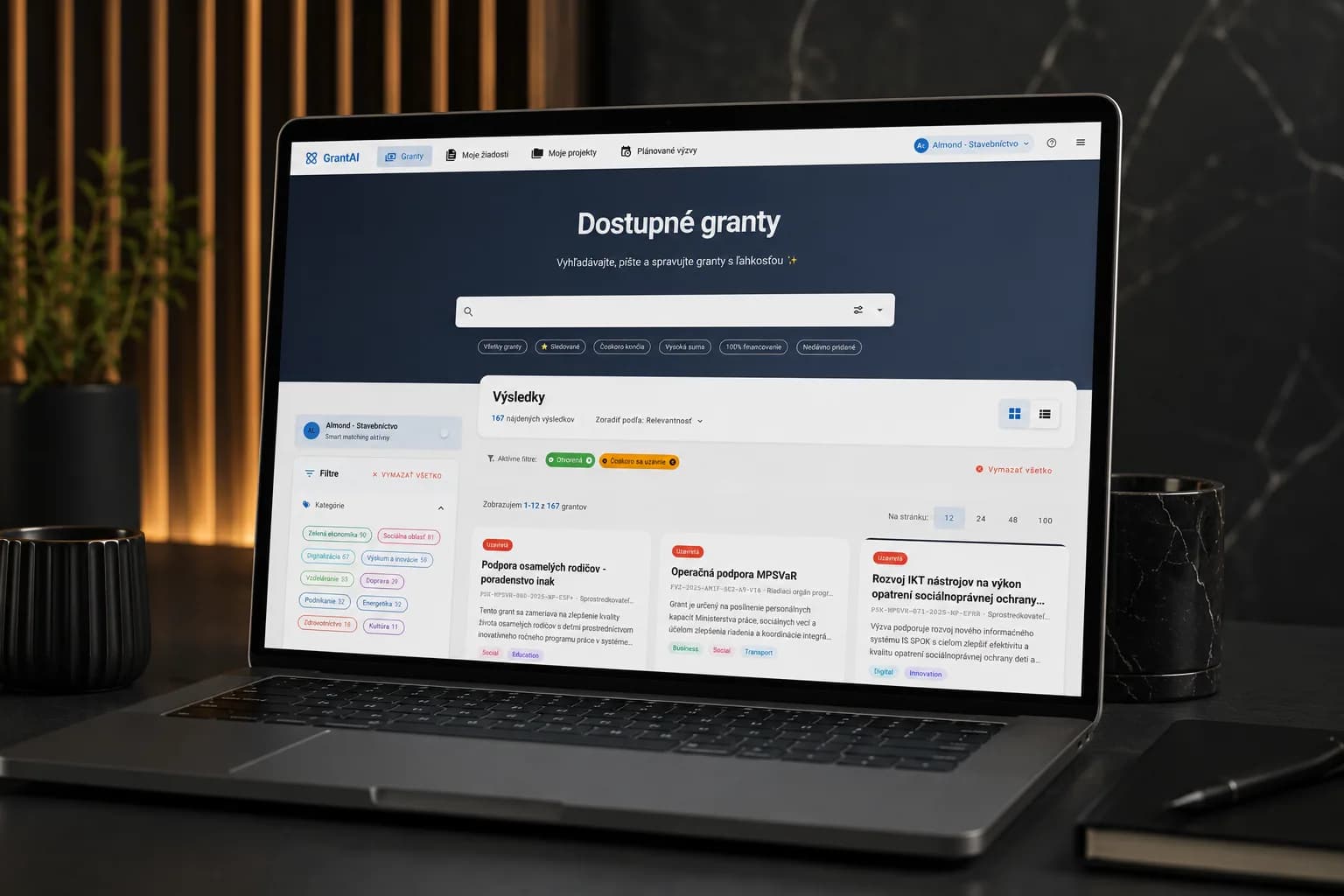
GrantAI connects funding sources, the organisation profile and call documents. One product covers finding a call, verifying eligibility, preparing materials and running delivery after approval.
Product journey
Five decisions in one grant workflow.
Every step uses the same organisation profile and source material. Context stays intact from discovery through the application and into delivery.
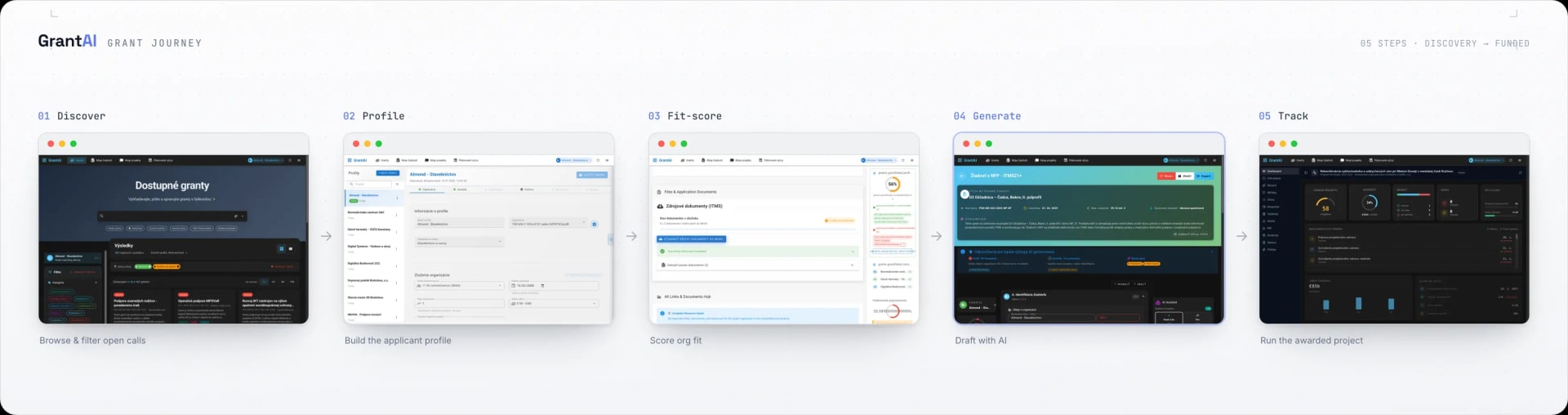
Scroll the diagram horizontally.
- 01
Discover a call
Connectors bring ITMS21, APVV, VEGA, and the Tatra banka Foundation into one comparable view.
- 02
Build the profile
Legal form, region, finances, people, and project goals are entered once and reused throughout the workflow.
- 03
Assess the fit
Ranking combines 30% semantic similarity with 70% rules. A separate gate checks 13 eligibility conditions.
- 04
Prepare the application
AI proposes text from the profile and call documents. An expert reviews, edits, and approves it before use.
- 05
Manage the project
After approval, milestones, tasks, budget, expenses, KPIs, deliverables, risks, and reports stay in the same system.
Information
- Project type
- Owned SaaS product
- Platform
- Web application
- Our role
- Our own product. We designed it from scratch, including the data model, the interface, and the AI layer.
- Status
- Product pilot
Technology
- Vue 3
- Vite
- Vuetify + Tailwind CSS
- TypeScript
- Django 5.2
- Django REST Framework
- PostgreSQL + pgvector
- OpenAI + Gemini
- Haystack
- LangGraph
- Celery + Redis
- MinIO
- Docker
What you will learn
- 01How to unify different funding sources without losing source data.
- 02How to separate indicative scoring from hard eligibility conditions.
- 03How to connect application preparation with managing delivery.

01
Opportunities from multiple sources in one model
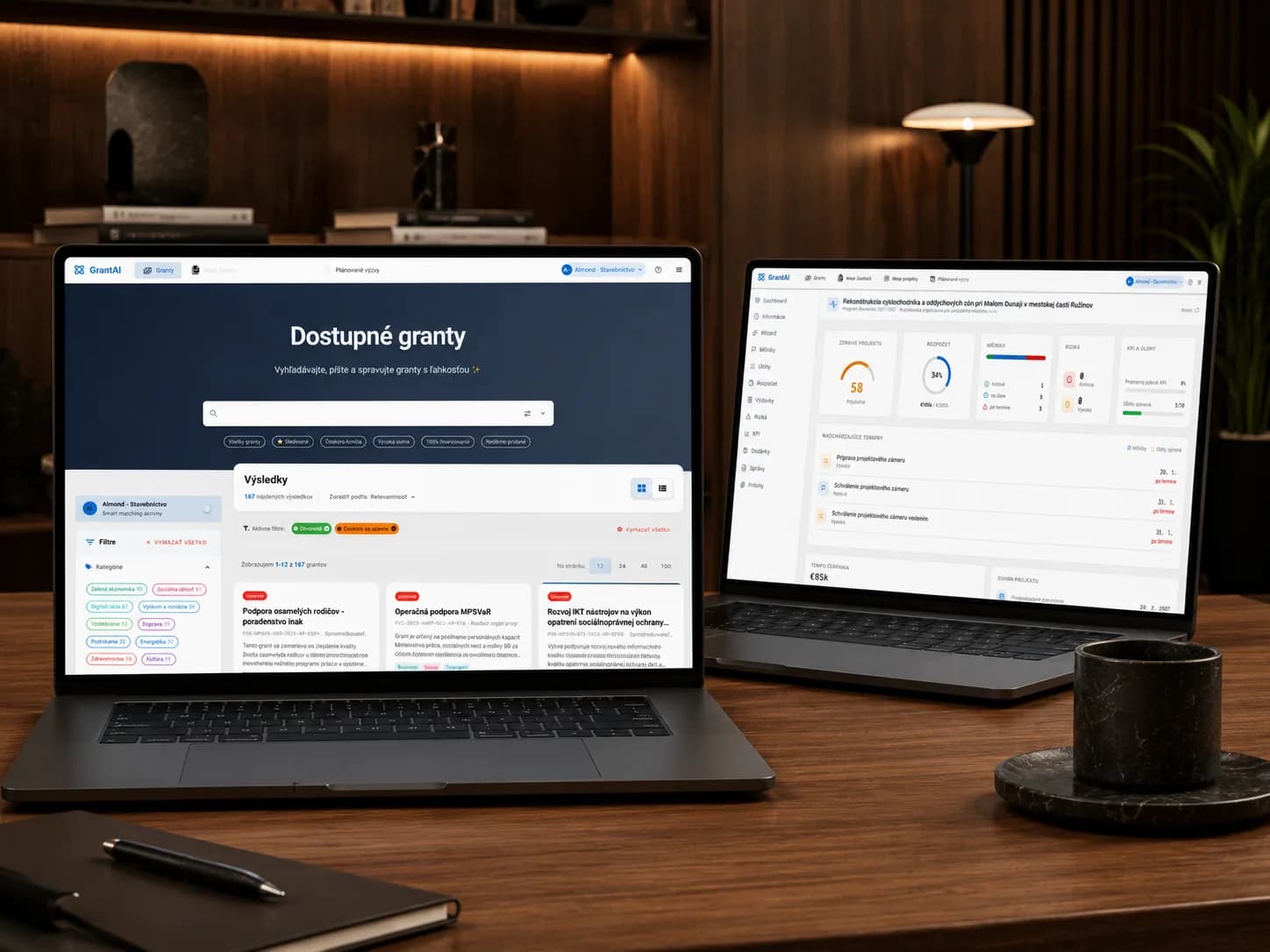
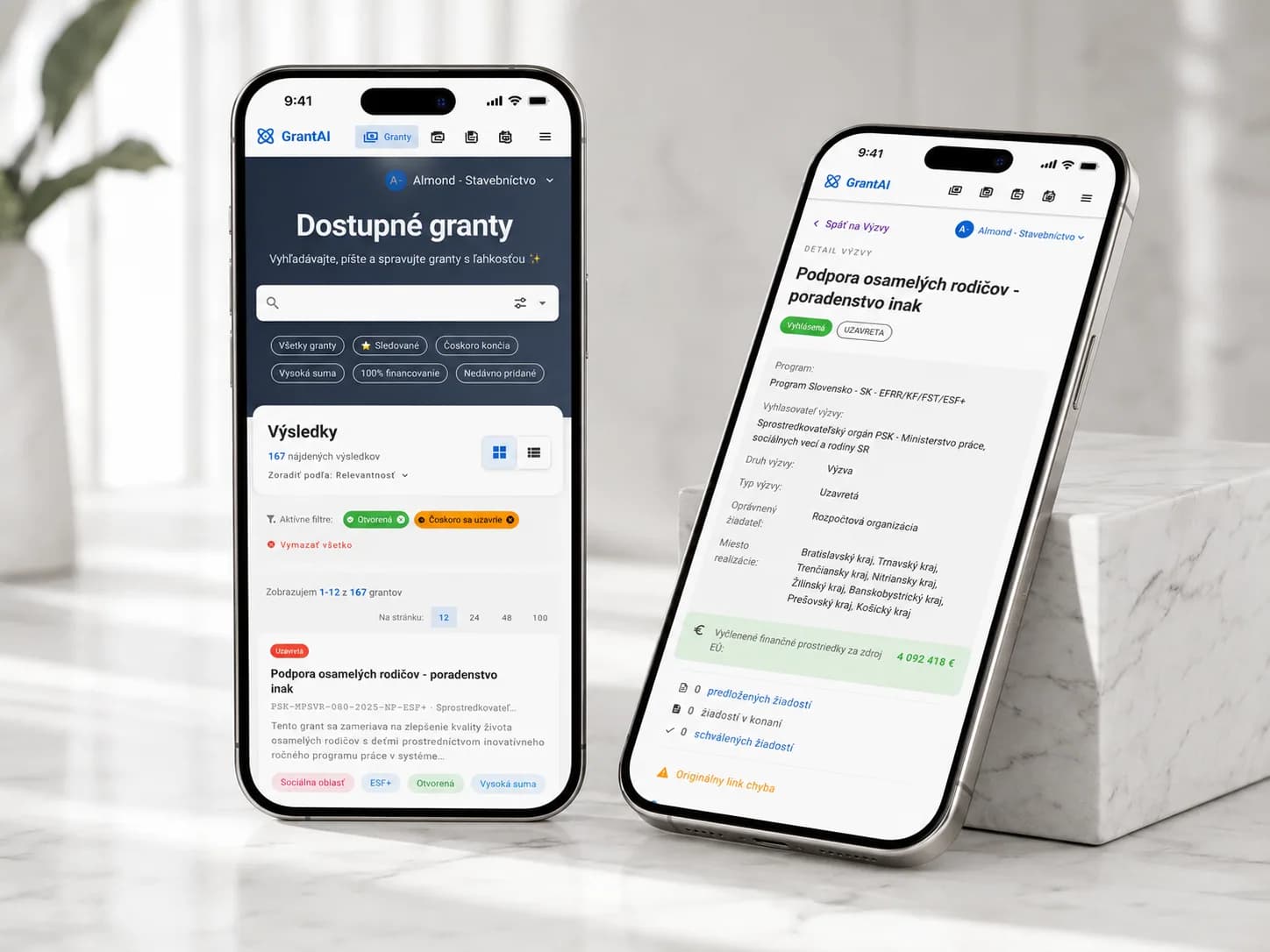
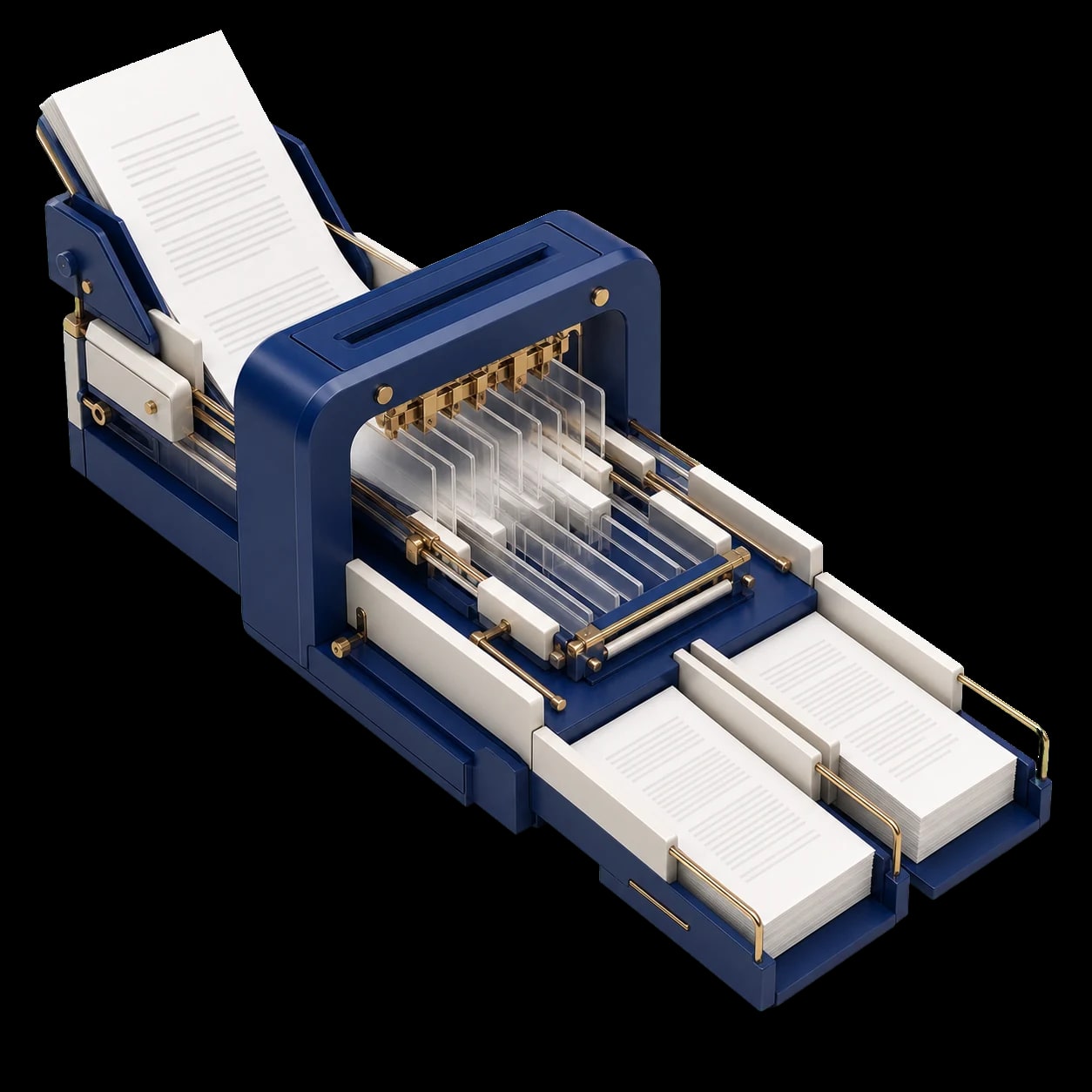
Connectors collect calls from ITMS21, APVV, VEGA and the Tatra banka Foundation into one structure. The team compares deadlines, conditions and funding without assembling a list of links by hand.
02
The applicant profile is persistent context
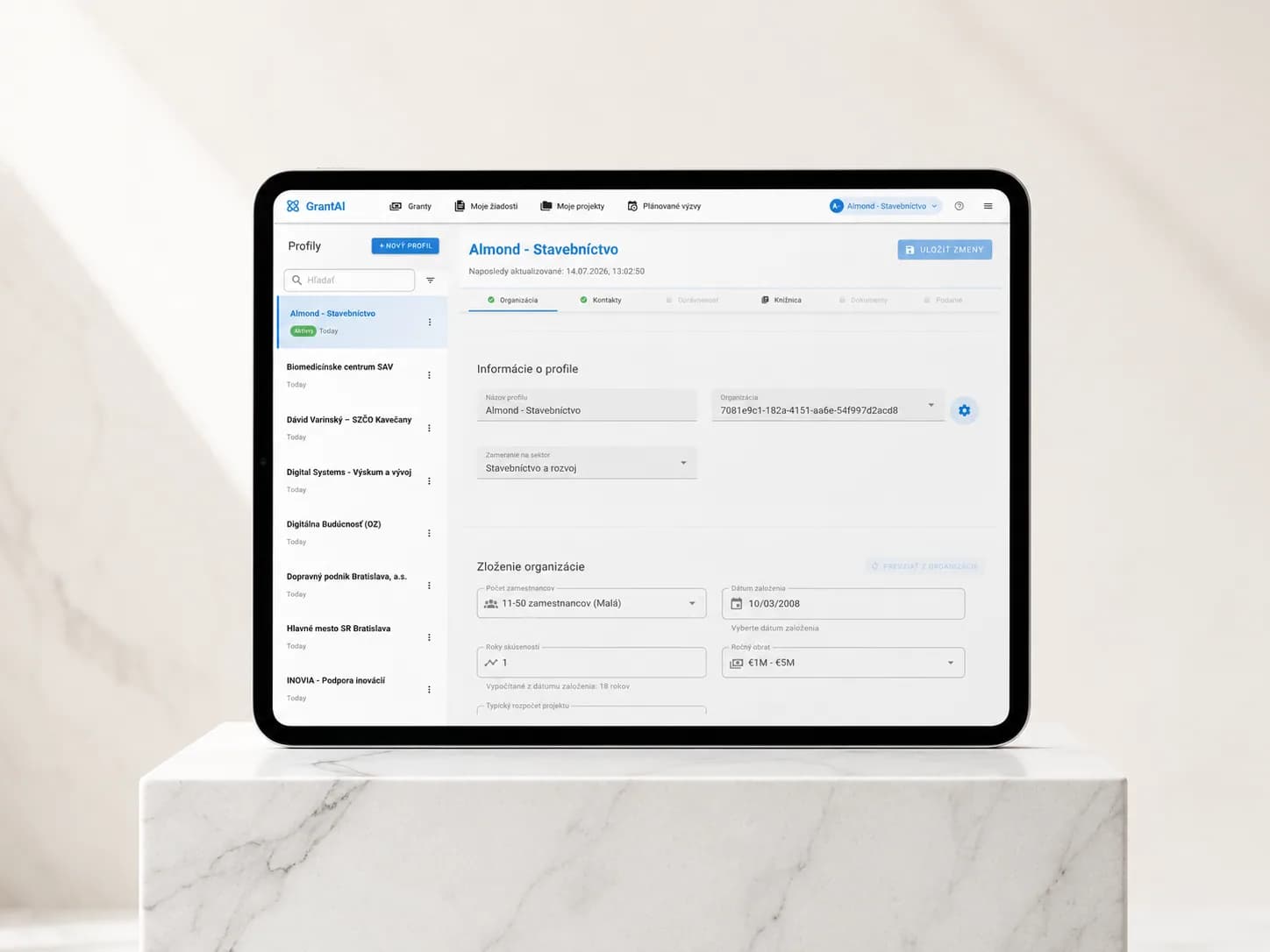
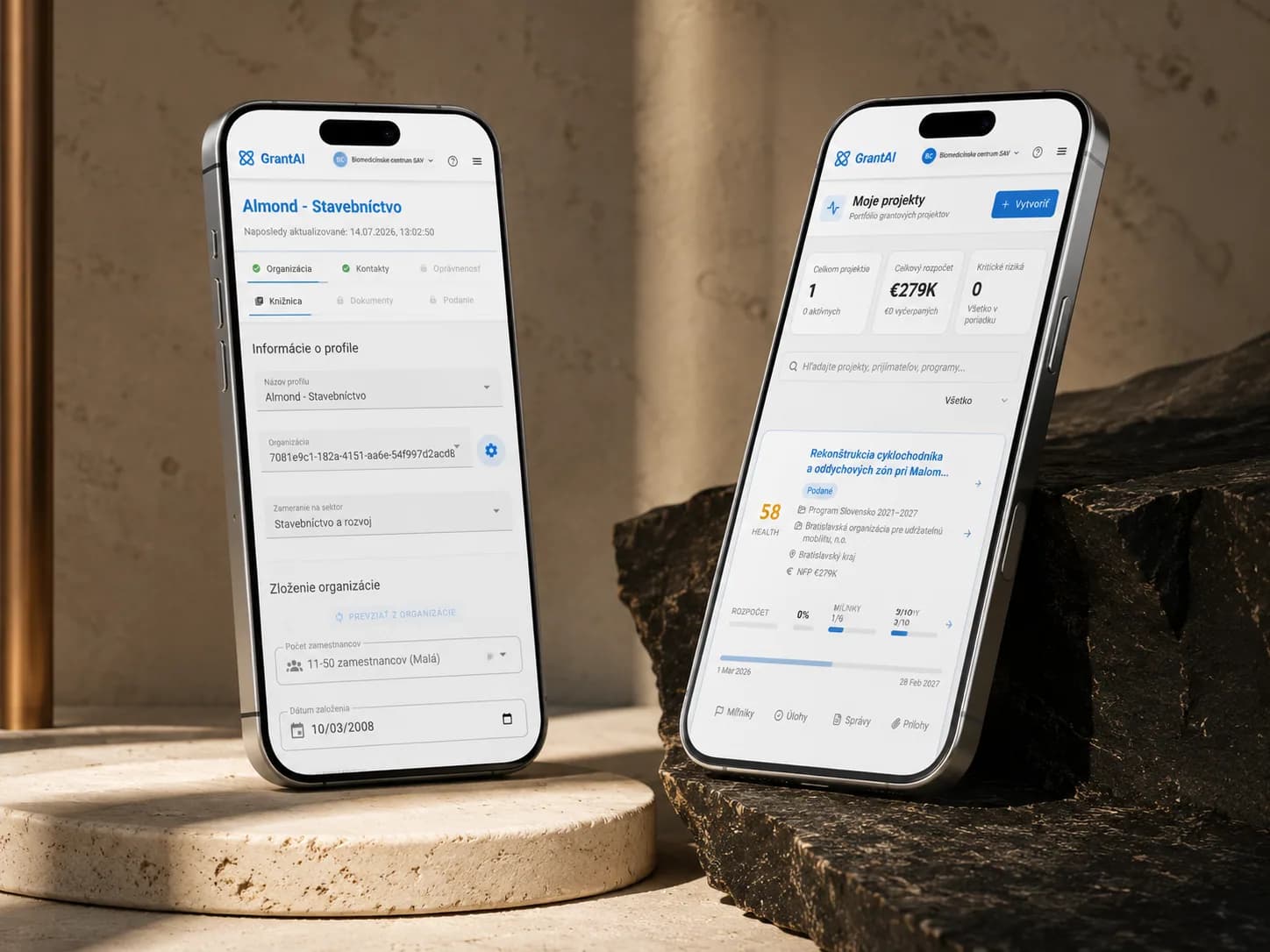
Legal form, region, finances, people, and project goals are recorded once in the organisation profile. The same context then informs discovery, eligibility checks, and application preparation.
03
Every match needs an explanation
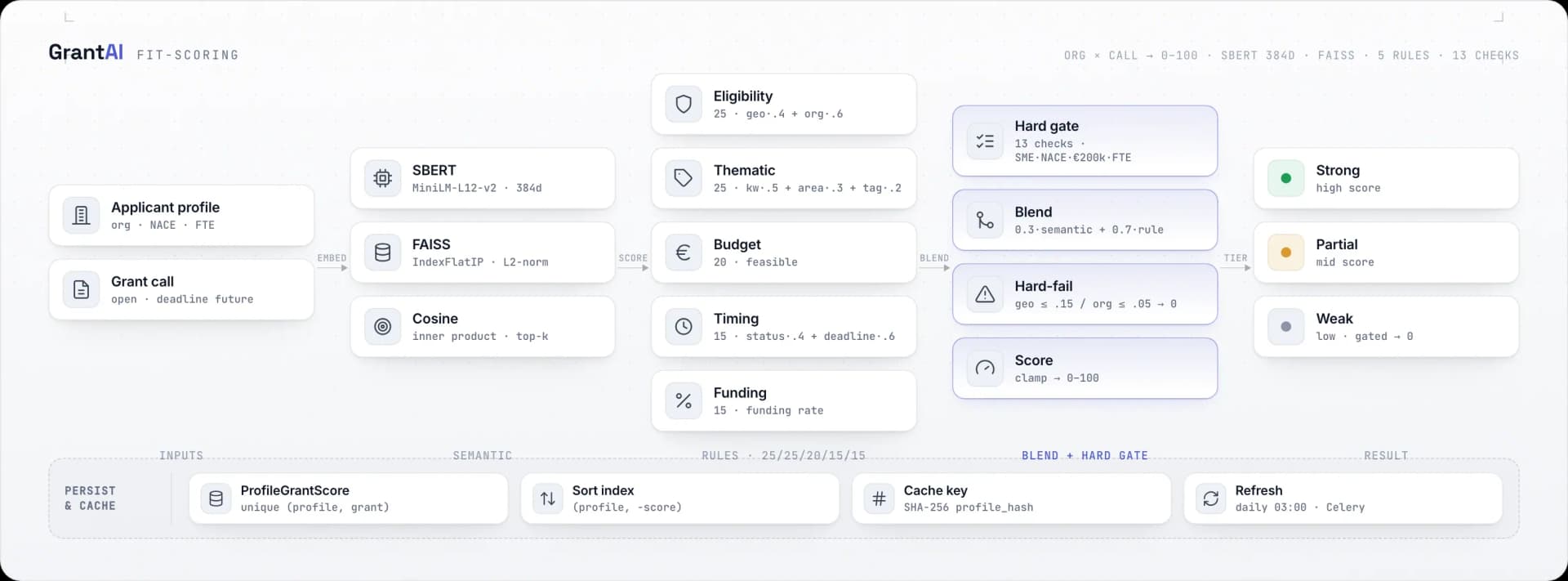
The indicative fit score combines 30% semantic similarity with 70% deterministic rules. A separate gate then evaluates 13 legal eligibility conditions and shows the reason for each result.
“A score helps rank. Eligibility decides.”

04
Application materials stay under team control
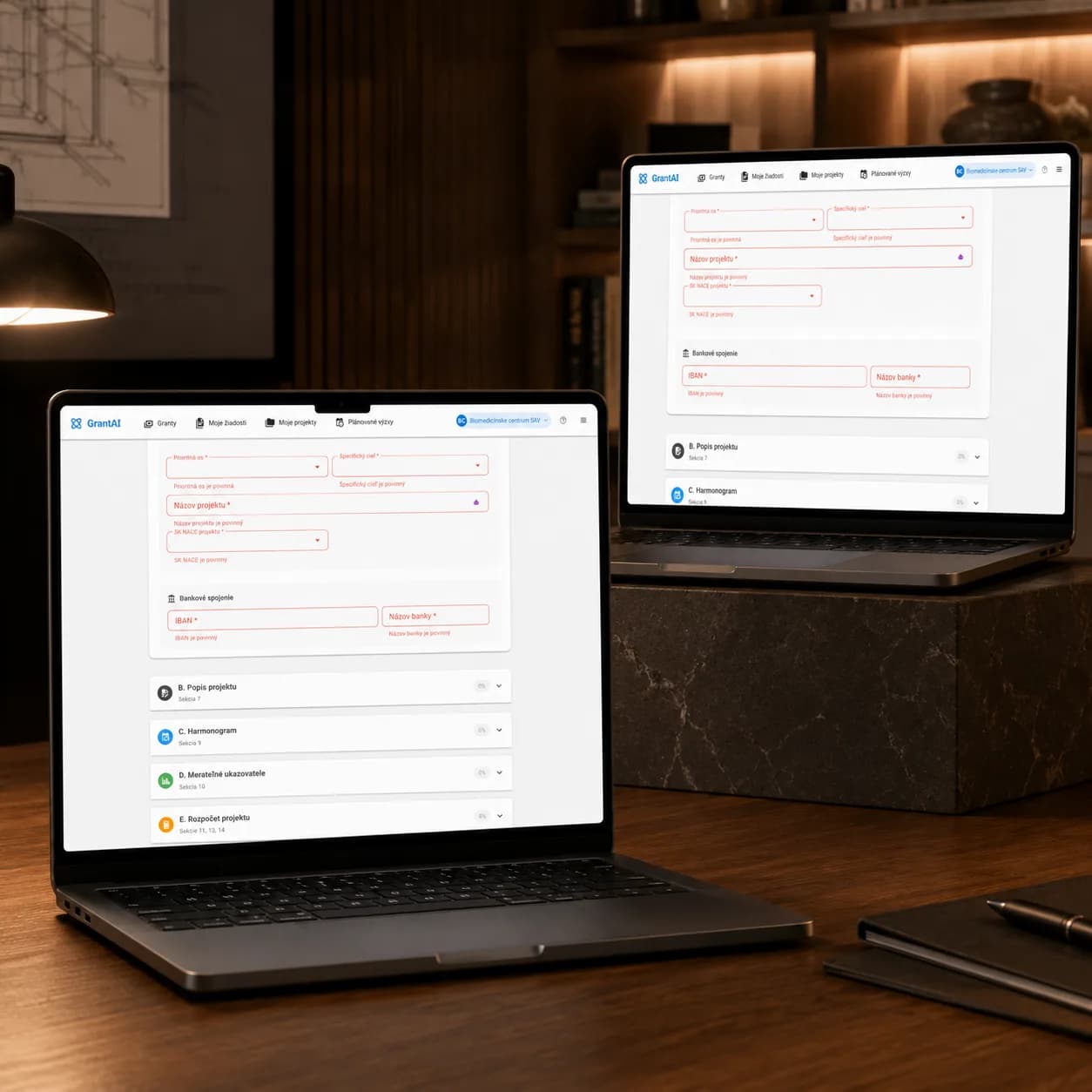
Call documents feed source-grounded search and Q&A, the form is built from a schema, and AI proposes a first fill. An expert sees the conditions, checklist, and draft before approval and export.

05
Approval is not the end of the workflow
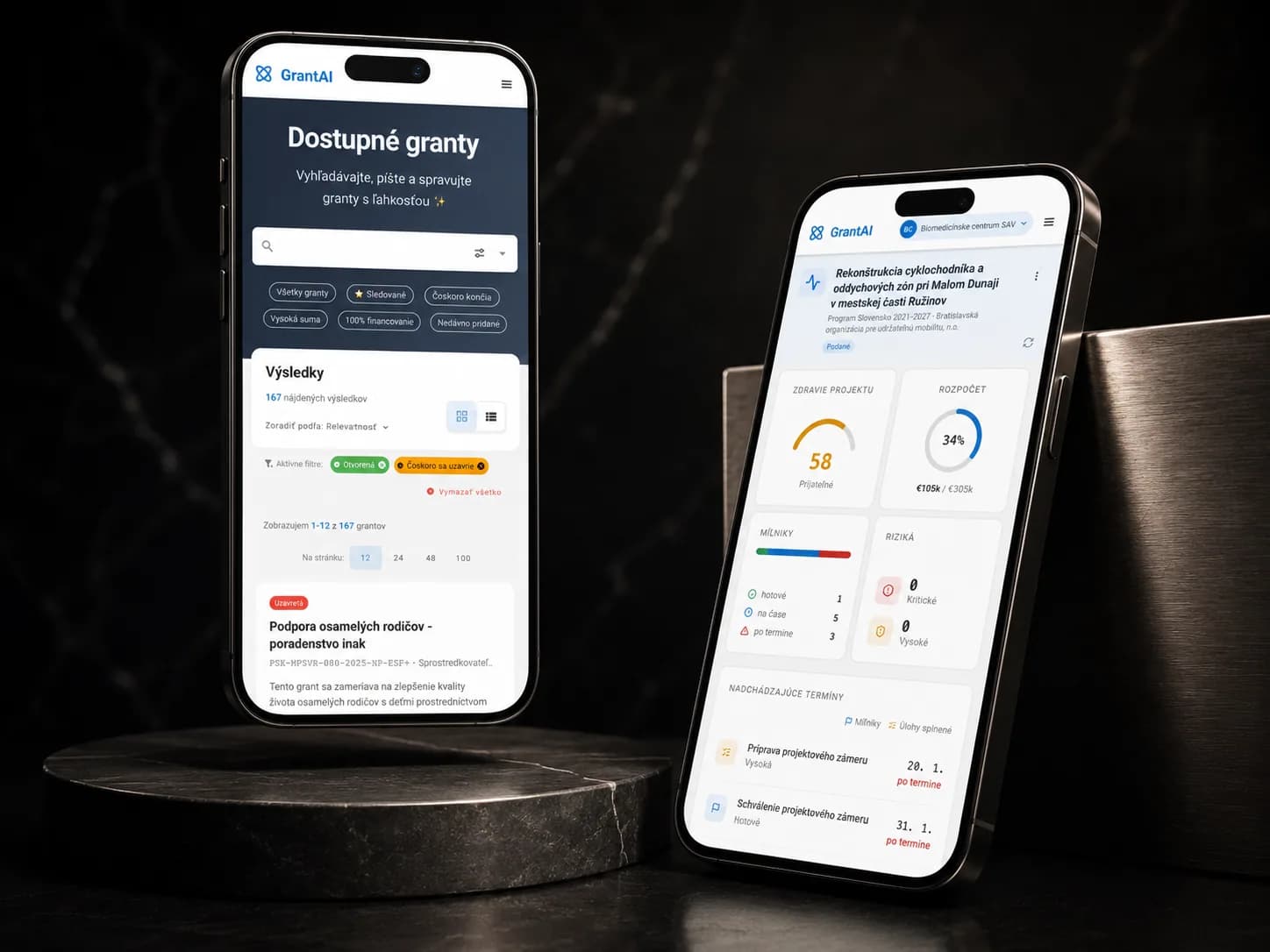
Once funding lands, the project stays in the same system. Milestones, tasks, budgets, expenses, KPIs, deliverables, risks and reports sit where the application was written. That is what a team proves.
System design
Workflow first. Architecture second.
The architecture follows the decisions in the product. Each layer has a clear responsibility, keeping source data, eligibility, AI proposals, and delivery from collapsing into one opaque process.
Decisions behind the design
Who decides, and when
We mapped the actors and decisions from call discovery through delivery.
Different calls, one model
We normalized different funding sources into one stable model without losing provenance.
Relevance is not eligibility
We separated indicative ranking from hard legal eligibility conditions.
Every proposal points to its source
We grounded AI proposals in the profile and source documents and kept expert approval.
The application becomes a project
We connected the approved application to project milestones, budget, risks, and reporting.
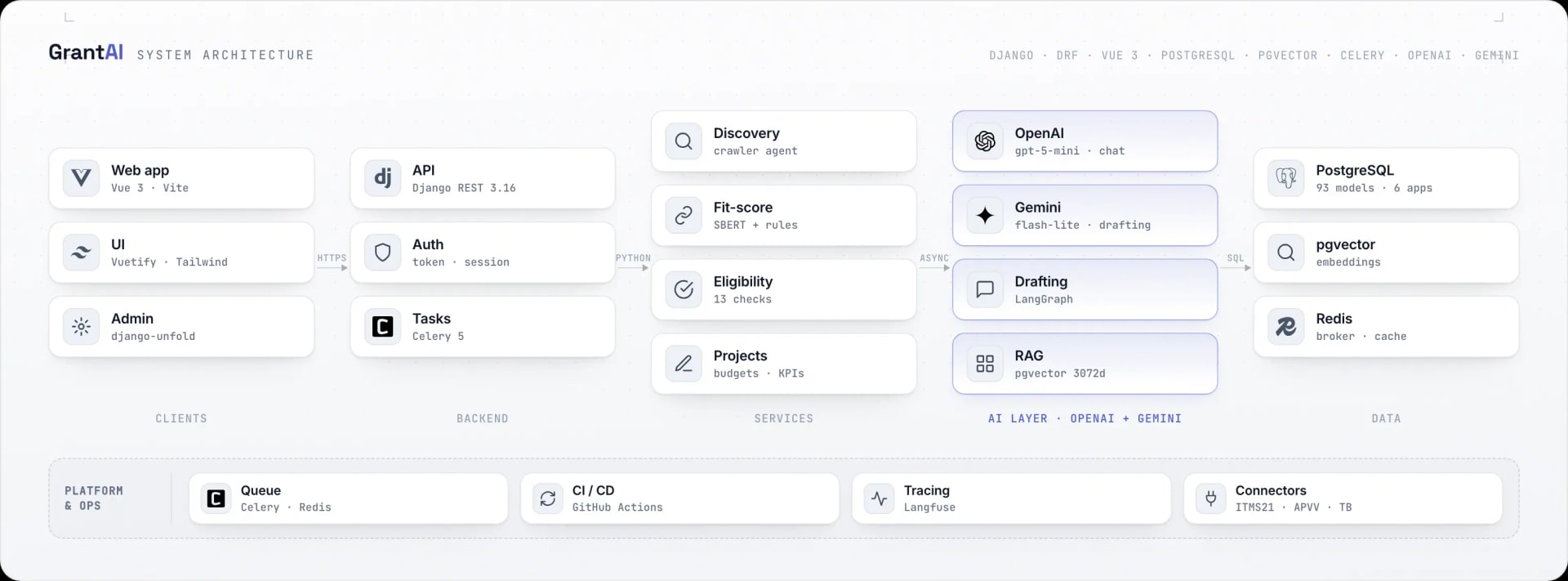
Scroll the diagram horizontally.
- 01
Client
Vue 3, Vite, Vuetify, and Tailwind present calls, profiles, application preparation, and project status.
- 02
API and orchestration
Django REST, authentication, Celery, and Redis validate requests and coordinate longer-running work.
- 03
Domain services
Discovery, fit scoring, eligibility, drafting, and project management remain separate decision units.
- 04
AI and RAG
OpenAI, Gemini, LangGraph, and grounded retrieval prepare proposals from approved context under human review.
- 05
Data and operations
PostgreSQL, pgvector, Redis, MinIO, connectors, tracing, and deployment keep source data and operational state.